Wednesday, December 23, 2009
Sunday, July 19, 2009
Perrier
Monday, December 22, 2008
Top ten holiday cocktails
It's summer, it's the stupid season (also, the lazy and lounging season), a lot of people are on holidays, and it's Christmas. Therefore, one requires several things to gracefully glide through December and January unscathed: a comfy pair of togs, a great dress, a good book, a easy-care haircut and... cocktails. They don't have to be alcoholic, just delicious, classy, and appropriate for both raucous late-night gatherings and a solo afternoon by the pool.
Thursday, December 11, 2008
Bottled water
Claridge's to offer water from around world
One has a sweet taste and is the perfect accompaniment to sushi, another is "distinctively soft" and goes with salads.
Another variety is said to be a favourite of the Pope himself.
These drinks don't come from a wine list - they are part of a collection of the world's finest bottled mineral water with the most expensive costing the equivalent of £50 a litre.
Claridge's is launching a water list next month, with 30 brands from as far afield as the icebergs of Newfoundland, the volcanoes of New Zealand and the Nilgiris Mountains in India.
Experts can differentiate between their mineral content and pH balance.
Llanllyr, a Welsh artesian water, has a soft taste from sources under organic fields, while Wattwiller, spring water from France, has a "pleasant hint of sweetness to the palate".
Renaud Grégoire, Claridge's food and beverage director, said: "Water is becoming like wine. Every guest has an opinion and asks for a particular brand."
The waters have price tags almost on a par with a wine list. One variety, 420 Volcanic, sourced through 200m of volcanic rock, costs £21 for 42cl, which works out at £50 a litre.
Berg, iceberg water from Canada, costs an equivalent of £30 a litre, while Mahalo Deep Sea Water, from Hawaii, costs £20 for 71cl, or £28 a litre.
The list may be welcome to the hotel's guests but it may anger environmentalists worried by the air miles needed to fly the water to Britain. A spokesman for Thames Water said: "Our water is of the highest standard and it costs less than a 10th of a penny per litre."
Claridge's has an answer, however. On the end of its list it offers a glass or jug of "London water," free of charge.
A sample of Claridge's Water Menu
Filtered through layers of ancient rock in the remote hills, it has a crisp and pleasant taste and is totally eco-friendly
This hard, medium mineral content spring water has a light, neutral, very drinkable taste.Still and gently carbonated.
Llanllyr is a very soft water which comes from sources beneath certified organic fields in West Wales, sources were first used more than 800 years ago and have been in the same family's hands since 1720.
Tau means silent in Welsh and this is a pleasant, easy to drink spring water from the Welsh mountains, with a low mineral content and an almost neutral pH balance.
Good water makes good whisky and from the home of whisky comes Speyside Glenlivet, alkaline spring water from Ballindalloch, Scotland.
Badoit has a substantial amount of minerals but a very light taste. It is sparkling water for people who never choose sparkling, as it has small and very fine bubbles. The high level of bicarbonate is beneficial for digestion.
Wattwiller's source was discovered by the Romans and is today surrounded by a large swathe of protected woodland. It has a high mineral content and offers a pleasant hint of sweetness to the palate making it ideal for drinking with fine foods.
In 1554 Michelangelo spoke about the curative effects of Fiuggi spring water. It has a low mineral content, fairly significant carbonation, an almost neutral pH factor and is said to be very popular at the Vatican.
Hard and slightly alkaline, this still water has been recognised for centuries for its quality and distinctive taste by nobles and locals from the Tuscan Apennines.
This water's greatest asset is its very low nitrate level, indicating an unspoiled source and its high mineral content offers a significant source of sulfates and calcium. It has a pleasant light sparkle, which compliments light mediterranean cooking.
Bottled at its Lombard source near the Alps, this water has an interesting combination of high bicarbonate and low sodium.
Glaciana is glacier spring water from the small village of Osa, at the inland end of the Hardanger Fjord in western Norway. It is remarkably pure with exceptionally low mineral content, perhaps the lowest found in any bottled water in the world.
Iskilde means cold spring' in Danish and was discovered in 2001 in the Mossø conservation area. The exact age of the water isn't known but it is believed that it could date back as far as the last ice age.
OGO spring water from the Netherlands contains no less than 35 times more oxygen than regular water does and has a refreshing and revitalising effect on exhaustion especially after a long flight.
It comes from the country's south coast – specifically, the remote, thinly populated Iveland area, northeast of Kristiansand. Rock and ice have protected the artesian source for hundreds of years.
Finé is artesian water from Japan. Its bottle is modelled on a traditional sake one and it is a perfect companion to sushi, sashimi and caviar. Finé has low mineral content and a slightly sweet taste due to its pH balance and an amount of silica.
The remoteness of the island ensures that this exquisite still artesian mineral water is uncontaminated by artificial substances. It has a low mineral content, is high in silica, slightly sweet with an overall smooth sensation on the palate.
Waiwera Mineral Water was first bottled and sold in the 1870's, when people travelled many miles to take the waters' at Waiwera Thermal Resort in New Zealand.
New Zealand's Rotomo Hills are totally free of industry and very nearly of people, so serve as a pristine source for Antipodes soft, low mineral content, artesian water with a neutral taste.
Sourced from a spring, the Tai Tapu, at the bottom of an extinct volcano 420 Volcanic bubbles to the surface through 200 metres of age old volcanic rock.
Cloud Juice is rainwater, bottled at one of the most remote places in the world, King Island, Tasmania. With the Cape Grim Weather station nearby, King Island enjoys the cleanest air in the world and the cleanest rainwater.
Berg from Newfoundland is pure, fresh iceberg water from one of the cleanest and unspoiled regions of the world. Iceberg water is unique. This water's journey started over 15,000 year's ago in the ancient glaciers of western Greenland. Isolation has made its source totally inaccessible to man. Only when a large piece of ice breaks into the sea, can it be harvested'.
Lauquen spring water begins as ice and rain in the remote Andes and travels upwards under its own pressure, emerging in a hollow in San Carlos Barilouche, Patagonia.
Locked in an icy vault for over 10,000 years, 10 Thousand BC water comes from melted glacier ice, sourced in the pristine Coastal Glacier Range in British Columbia, Canada.
From Kailua-Kona, Hawaii, this rare deep sea water, was orignally a freshwater iceberg which melted thousands of year ago and, being of different temperature and salinity to the sea water around it, sank to become a lake at the bottom of the ocean floor. The water has been collected through a 3000ft pipeline off the shores of Hawaii.
Bottled at source to maintain its purity and freshness, Just Born Spring Drops is from the Nilgris Mountains in India. It is naturally filtered through the mountain layers and is suitable for all ages, particularly people with sensitive digestions, new born babies, children, pregnant ladies and the elderly.
Sunday, November 30, 2008
Coconut soda
It was... OK. Not the best. Quite preservativey. Good flavour, but too bubbly, too sweet. I can see that some people would like it a lot. Guess I still don't really know what I am looking for, but when I find what quenches my coco-craving, I will report back.
Wednesday, November 05, 2008
Champagne
She keeps Moet & Chandon in a pretty cabinet. Note: the correct pronunciation is Moet WITH the T, not silent. This I know, because lucky me spent ten months living on Avenue de Champagne, in the founding town of the champagne district, Epernay. Tough break.
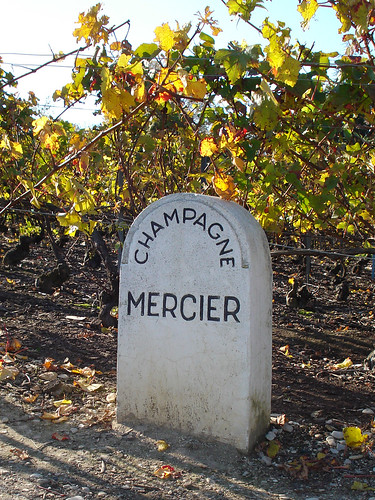
In the street are the production houses of Moet & Chandon, Perrier-Jouet, Mercier, Piper-Heidsieck, De Castellane, Gauthier and Pol Roger, among others. All of the houses are grand, ornate, castle-like buildings in a turn-of-the-century architectural style, with gold-plated gates, scrollwork, statues, circular drives and so on. In winter the sky is a permanent dull grey, and the champagne houses look magnificent, imposing and bleak against the dark frozen backdrop.
I was able to take a few tours while I was there, do a few tastings, and take a ride on the underground trains which roam the kilometres of chalk cellars deep beneath Epernay. Contrary to poular belief, the people of Epernay don't spend endless hours quaffing top-rate champers on the cheap. It's only slightly cheaper to buy it within the region as it is outside, and when you grow up with champagne you treat it as the special treat that it is.
But all of this is beside the point: which champagnes are best to drink?
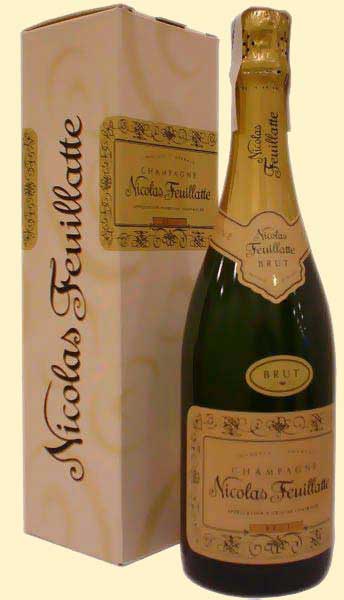
A local favourite is Mumm (produced down the road in Reims). It's cheaper than others, has a creamy soft finish and a wonderful colour. A couple of smaller producers that I personally love are Nicolas Feuillatte and Perrier-Jouet. I'm not ashamed to say that I am especially in love with the Perrier packaging: the retro vintage stylised labels and the art deco colours. Their Belle Epoque limited edition flower bottle is just gorgeous. Might make a great birthday or Christmas present.
Of course, other producers like Veuve-Clicquot Ponsardin (Reims) also look beautiful and make a great product.
And when there's a half-bottle left over of your favourite champagne, recipes like champagne risotto and champagne jelly will use it up nicely.
Most of these champagnes are available at Dan Murphy's.
Monday, October 27, 2008
Pontesa ironware
Sunday, October 19, 2008
Preshafruit
Friday, September 26, 2008
Boylan Bottling Co
Wow. Down at the Fig Tree Deli today, ran into these brand spankin' offerings from theAmerican Boylan Bottling Co, apparently been around since 1891, only the best and purest ingredients, old-school techniques, blah blah blah.
Meanwhile, I had the Diet Cane Cola. And it was really really good. It may sound weird, but not too sweet. Bizarre, I know, for a bottled lolly water to be not too sweet. And also not too fizzy. The bottle looks really cool, and it's taller and bigger than a Coke bottle. They say they've had them in for almost a month, and selling very well.
Monday, September 01, 2008
My liquor cabinet
- Tanqueray gin
- Bombay Sapphire gin (one needs one's martini, or gin and tonic, to be adequate)
- Cinzano Dry vermouth
- Absente
- Mount Gay rum (used thusly)
- Rose syrup
- Other syrups: peach, chocolate, cranberry, blackcurrant. For making kir royales, chocolate martinis, cocktails.
- Grenadine
- Tempus Two botrytis semillon, for freezing winter nights
- A caramelly tokay, ditto
- Apple schnapps, for flavouring pies and fruit
- Pastis 51 (a remnant of France, again)
- St. Remy brandy, to put in my galette des rois and to help preserve fruit
- Amarena sour cherry syrup (goes down great with icy soda water on a hot day)
- Cointreau (for Nigella's flourless chocolate cake)
- Tawny port (for the Christmas cake)
Gee, that seems like a lot. Oh well. No regrets. There's also a wine cabinet somewhere which is mostly filled with the Italian, Chilean, South African and French imports I like to buy, and the local stunners that we get given as gifts. Quite a selection.
What do you have in your liquor stash?
Wednesday, May 21, 2008
Limoges, tea ball and Monk Pear
Wednesday, April 02, 2008
Mount Gay & Chinotto, please, bartender
Sunday, February 03, 2008
Lime bubbles
I came across some finger limes at the markets. The flesh inside is almost like little balls: tapioca-like, but acidic and juicy. When we squeezed some lime balls into a glass of soda water, they travelled up from the bottom, bounced off the surface and floated back down again. I'm sure this has something to do with physics: the internal pressure of the liquid, the density of the lime flesh as opposed to the carbonated bubbles, the equilibrium and stability of the soda water.
(Note: obviously, the video is sideways...)
Thursday, June 07, 2007
Pastis and absinthe
Part of the family of bitter aniseed liqueurs, like ouzo, raki, arrak, anisette and sambuca, pastis and absinthe are two French alcoholic aperitifs that although similar, have very different backgrounds.
"...is an anise-flavored liqueur and apéritif from France, typically containing 40–45% alcohol by volume, although there exist alcohol-free varieties.
Pastis is normally diluted with water before drinking. Generally five volumes of water for one volume of pastis, but often raw pastis is served together with a jug of water for the drinker to blend together according to preference. The resulting
decrease in alcohol percentage changes the liqueur's appearance from dark transparent yellow to milky soft yellow, a phenomenon also present with absinthe. The drink is consumed cold, with ice, and is considered a refreshment for hot days. Ice cubes can be added after the water to avoid crystallization of the anethol in the pastis. However, many pastis drinkers refuse to add ice, preferring to drink the
beverage with cool spring water."
You CAN, if you are a die-hard pastis groupie, or perhaps if you are a
Provencal native with a taste for liqueur and a lot of time on their hands,
try distilling your own pastis. Ingredients are usually alcohol, star anise, both
black and white pepper corns, cardamom, sage, nutmeg, cloves, cinnamon,
licorice and a little sugar. However, creating pastis from scratch is not worth it. To
beef up the potency of your pastis, you can re-ferment it, using a small amount
of ready pastis, more alcohol, more herbs and more sugar. Good luck... here's the recipe.Some, not a lot, of recipes call for pastis. It's used mostly as a light flavouring agent with other flavours present, as its strong taste can overpower at times. BBC Food has Rick Stein's delicious-looking roasted sea bass with a Camargue rice risotto, (you could substitute small salmon or trout here) while About.com (American, but
not too bad) has a selection of recipes including some dessert doughnuts, souffle and crumble.Back to absinthe. Everyone knows the story about how it was banned due to its high wormwood content and therefore extremely hallucinogenic properties... and everyone knows about Kylie Minogue dancing around for about 30 seconds in Moulin Rouge as The Green Fairy, a product of Ewan McGregor's absinthe overload.
"Absinthe is typically green (either naturally or with added color) and is often referred to as la Fée Verte ('The Green Fairy'). Because of its high proof and concentration of oils, absintheurs (absinthe drinkers) typically add three to five parts ice-cold water to a dose of absinthe; often the water is used to dissolve added sugar to add sweetness. The resulting cloudy drink is called a louche. This procedure is considered an important part of the experience of drinking absinthe, so much so that it has become ritualized, complete with special slotted absinthe spoons and other accoutrements. Absinthe's flavor is similar to other anise-flavored drinks, with a light bitterness and added complexity imparted by multiple herbs.
Absinthe originated in Switzerland as an elixir/tincture, used in a similar capacity as patent medicines would be used later in the United States. However, it is better known for its popularity in late 19th and early 20th century France, particularly among Parisian artists and writers whose romantic associations with the drink still linger in popular culture.At the height of this popularity, absinthe was portrayed as a dangerously addictive, psychoactive drug; the chemical thujone was blamed for most of its deleterious effects. By 1915, it was banned in a number of European countries and the United States. Even though it was vilified, no evidence shows it to be any more dangerous or psychoactive than ordinary alcohol. A modern absinthe revival began in the 1990s, as countries in the European Union began to reauthorize its manufacture and sale."
Pastis is more your calm, sunny, hot-day-on-the-coast aniseed-based aperitif: Absinthe is for late and smoky Parisian nights, made with herbs and ex-hallucinogens and getting that "wow, I can see my hands" feeling.Most excellently, there is now an import available for sale in Australia called Absente, a stylistic and playful version of the real thing to be enjoyed by all us responsible absinthe fans. Good bottle shops in Brisbane stock it, although it can be on the expensive side of $50. Check out the appropriately-blurred and seeing-double image of Van Gogh on the carton. Inside is also a real absinthe spoon, for the full experience. Get your mates round for a Moulin Rouge party! (Buy sugar cubes first).
Pastis brands available here in Brisbane: mainly Pernod/Ricard. You might find somewhere a bottle of Pastis 51, the real and original and only pastis drunk by locals in Provence. It's fantastic.